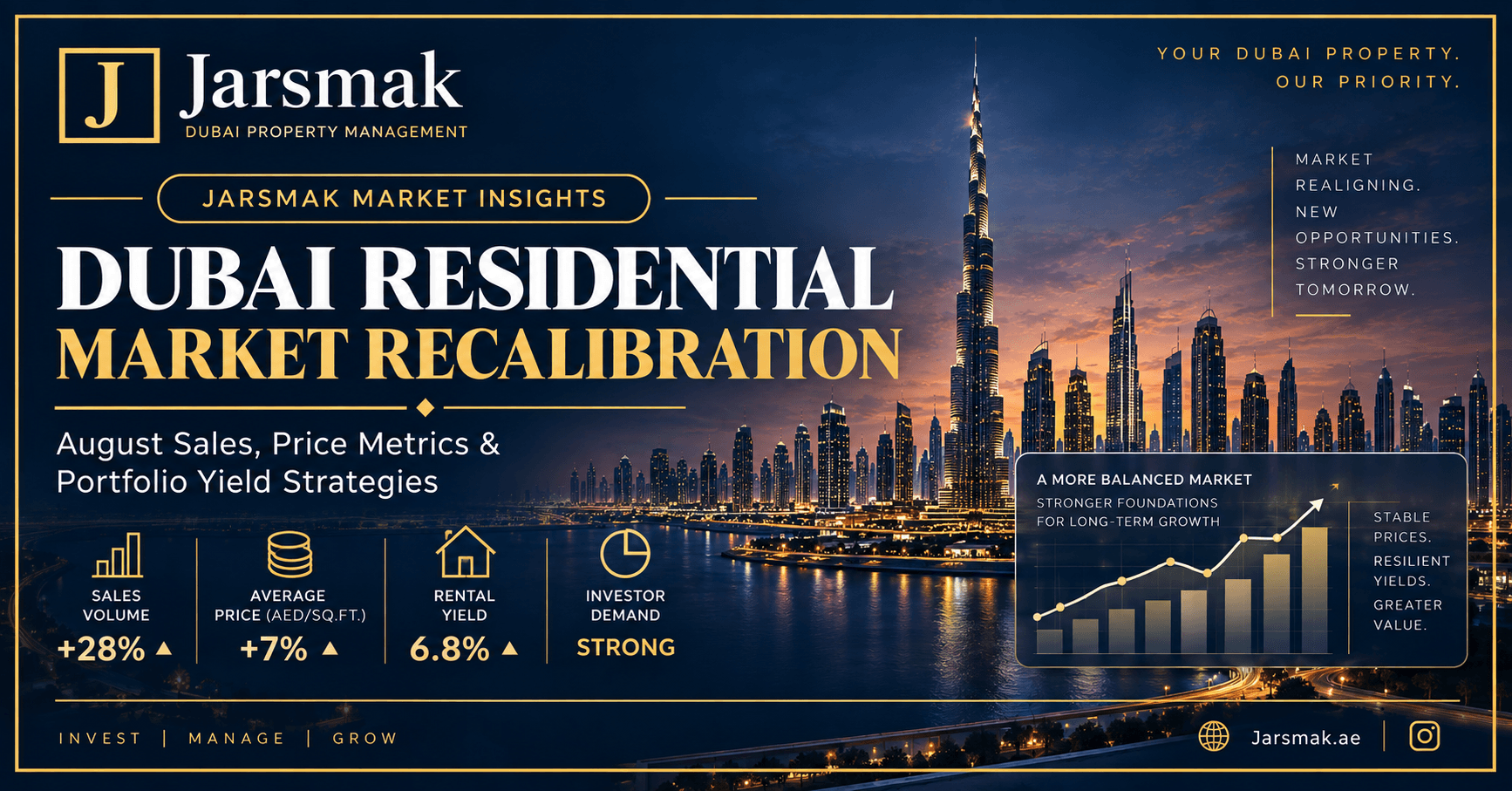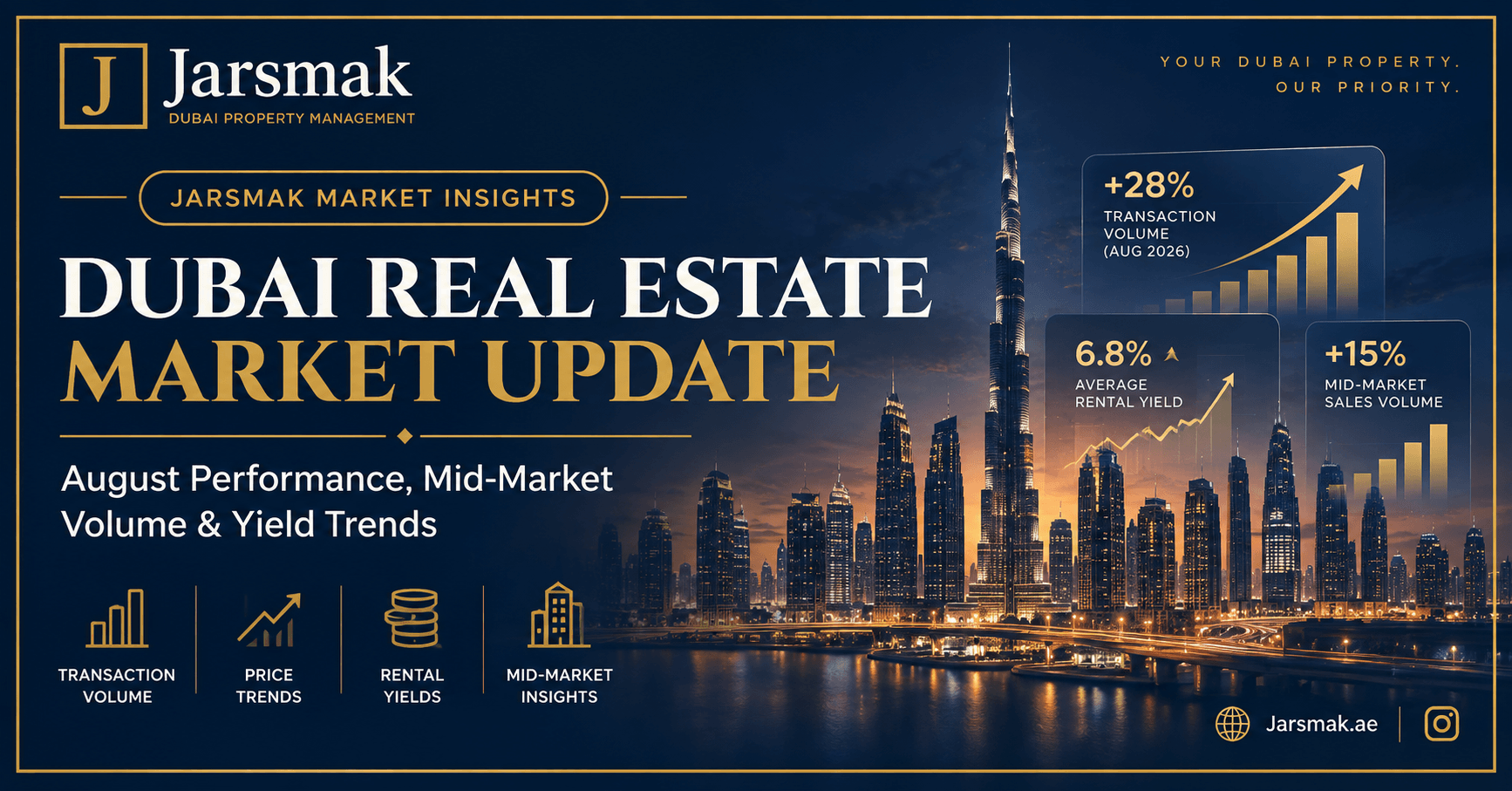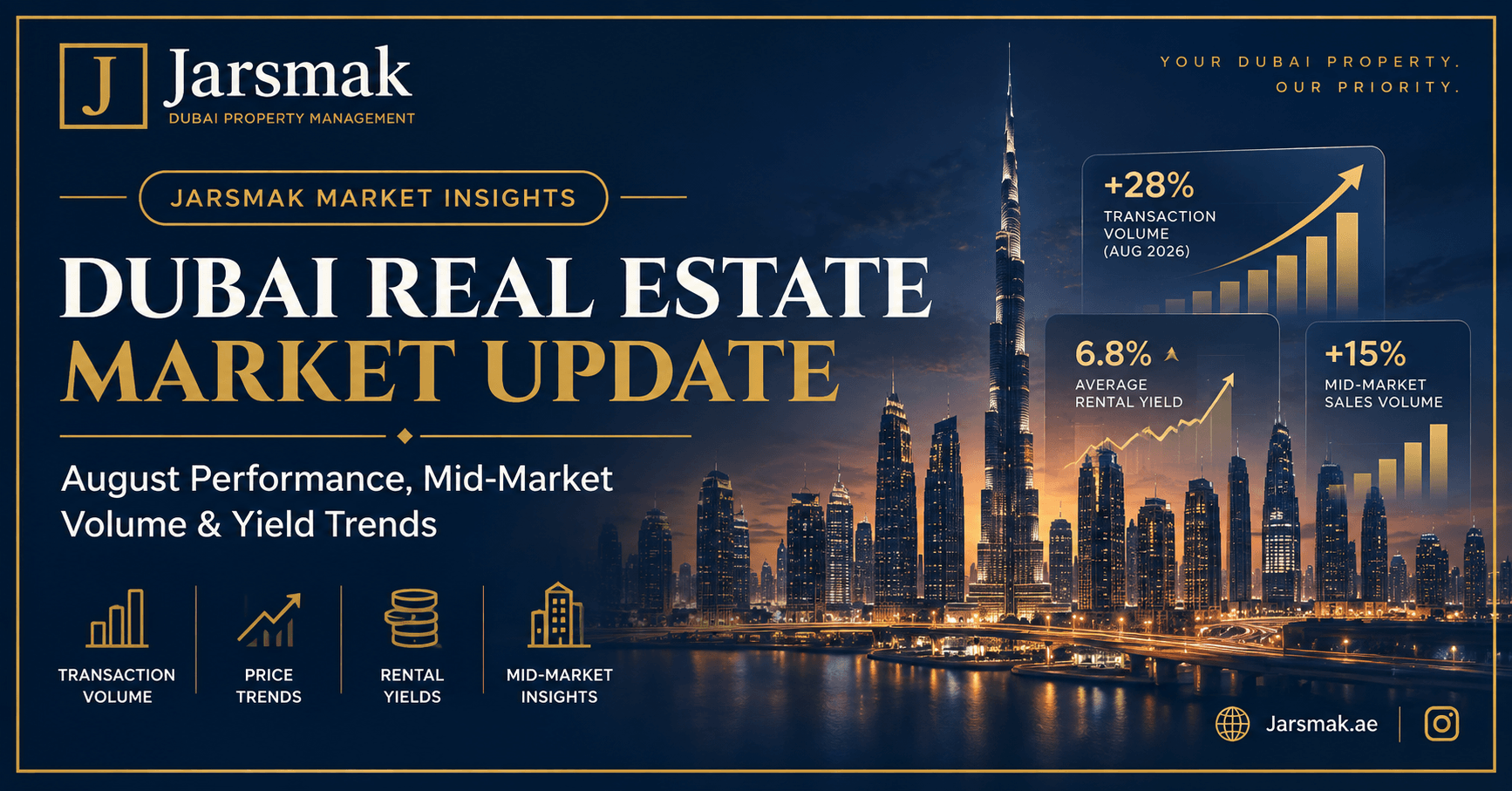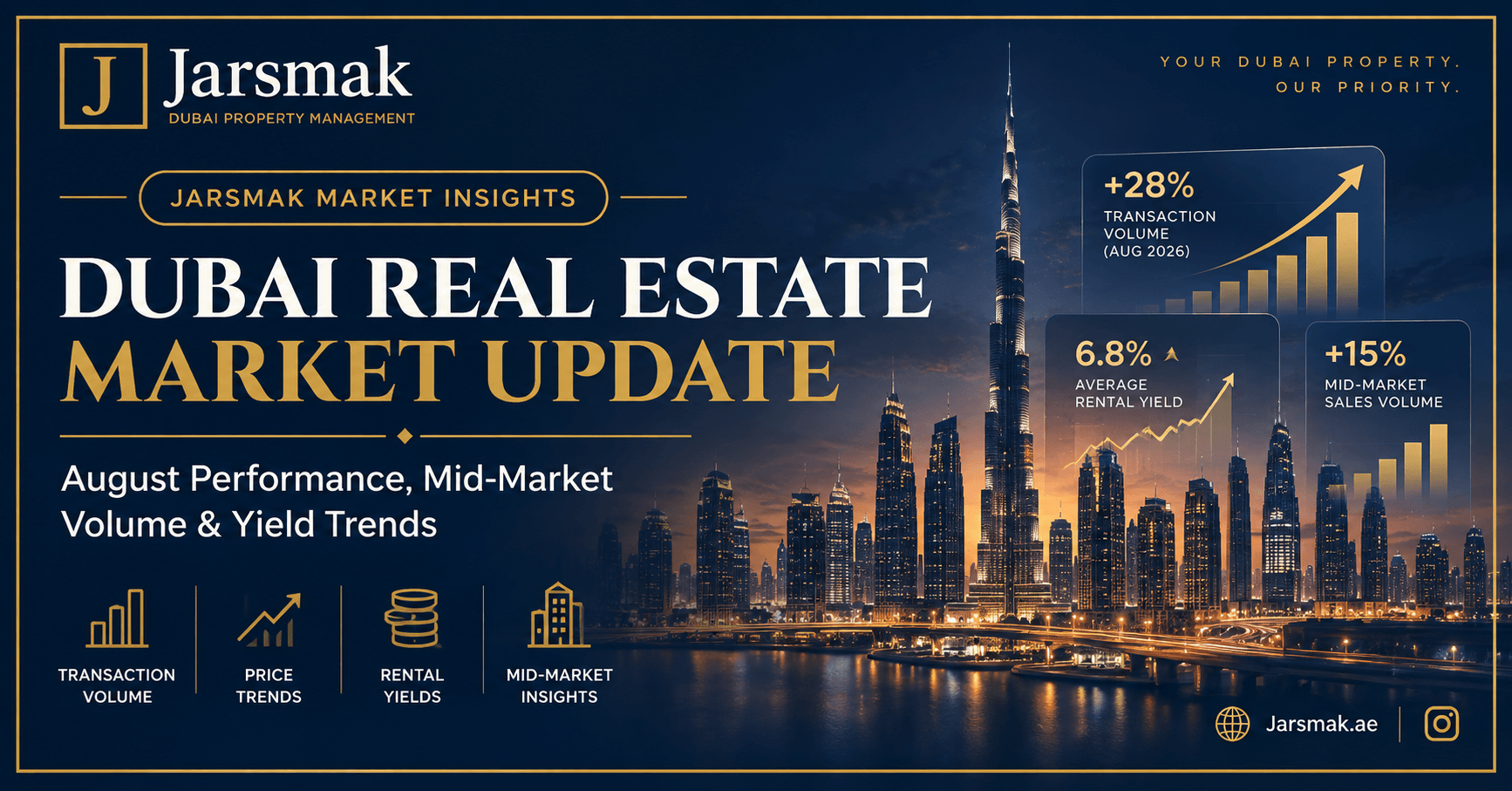
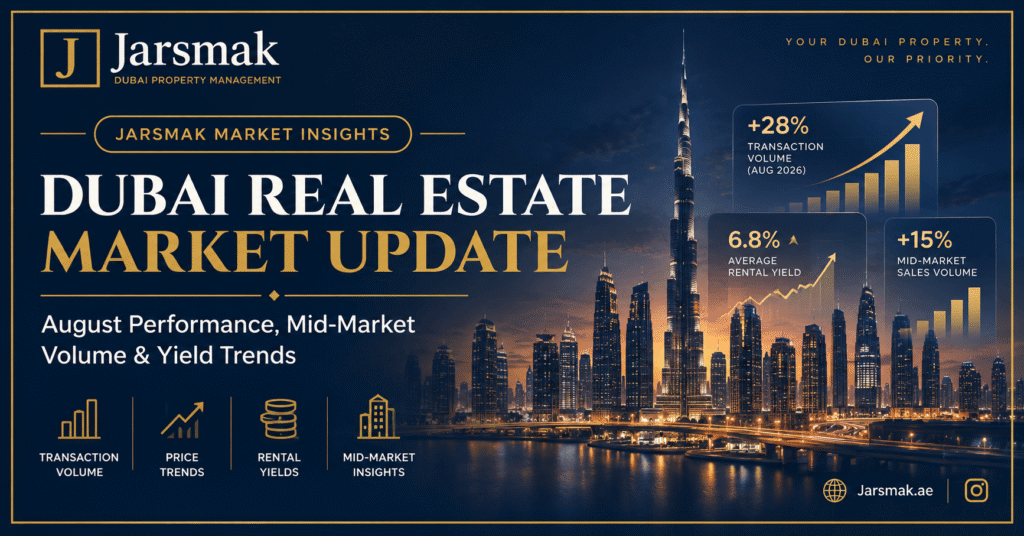
Navigating the shifting currents of UAE property requires distinguishing between headline-grabbing vanity sales and verified transaction velocity on the ground. Specifically, reviewing the latest dubai real estate market update reveals precisely where genuine buyer capital is concentrating across the emirate. While multi-million dirham waterfront trophy deals dominate international news channels, empirical market data demonstrates that mid-market end-users and investors are driving real liquidity. According to Springfield Properties’ latest market report, August closed with an impressive AED 23.26 billion in sales across 10,819 transactions. Consequently, digesting this performance data remains essential for overseas property owners, brokers, and institutional investors evaluating their portfolios in 2026.
Analyzing August Data in the Dubai Real Estate Market Update
Examining monthly transactional figures provided by official property reports highlights a market operating with remarkable structural depth. Total residential sales volume reaching AED 23.26 billion across nearly eleven thousand completed deals underscores continued momentum across all buyer segments. Furthermore, this robust activity reflects sustained population growth, flexible resident visa policies, and enduring confidence in the UAE’s broader macroeconomic environment. While global economic recalibrations have caused temporary pauses elsewhere, Dubai’s property ecosystem continues to attract substantial international inflows. Therefore, analyzing every new dubai real estate market update helps landlords make data-driven acquisition and leasing decisions.
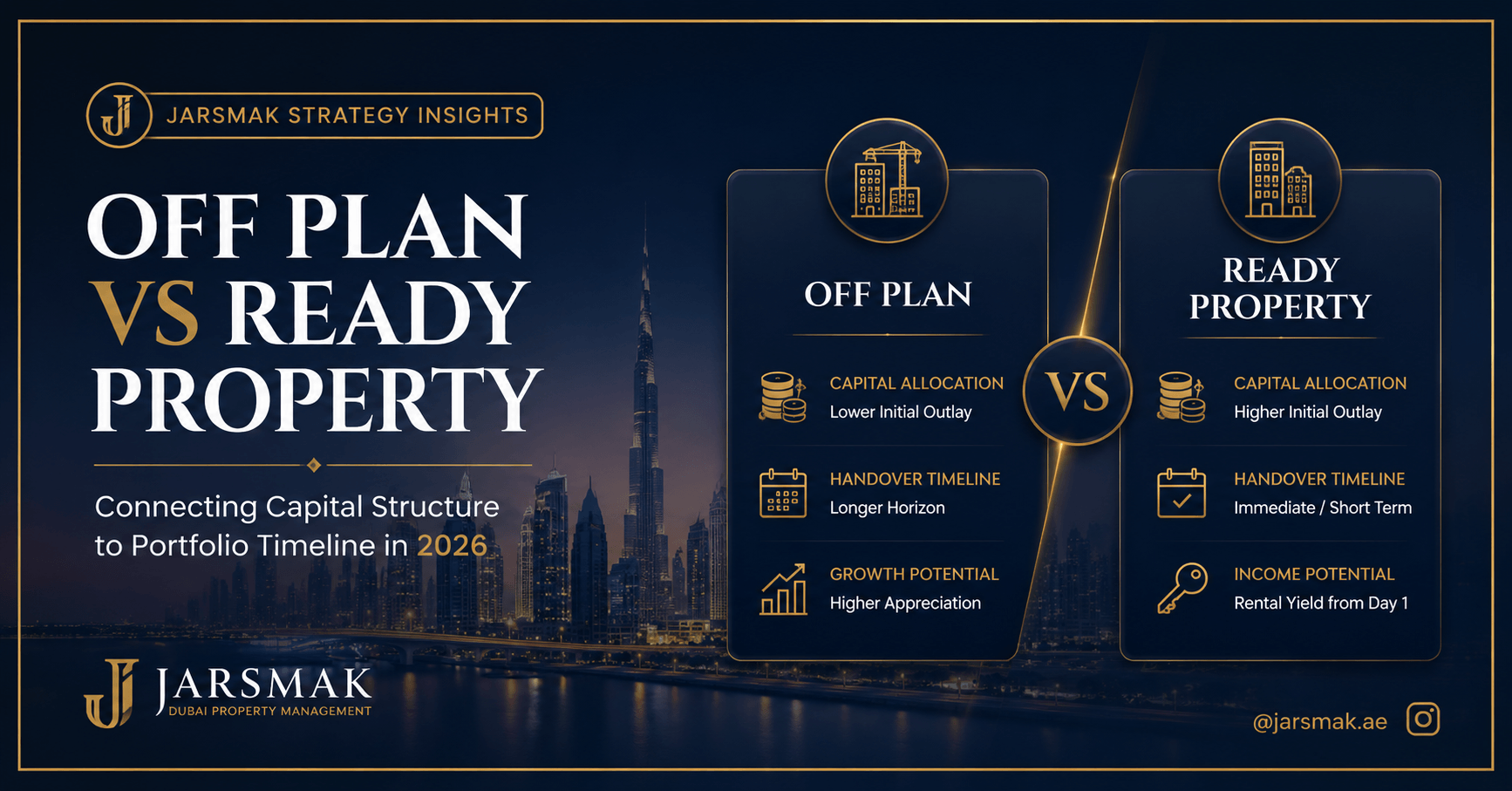
Equally notable is how buyer activity is distributed between unbuilt developments and existing residential stock. Unquestionably, both market sectors demonstrated firm liquidity throughout August, catering to distinct investor timelines and capital structures. While off-plan properties attract long-term wealth creators seeking phased entry, ready units satisfy those requiring immediate cash flow. Balancing these dynamics allows strategic investors to optimize net rental returns across shifting economic cycles.
Off-Plan Supremacy Versus Secondary Market Performance
Off-plan development remained the dominant force driving transactional volume during August, according to recent market metrics. Specifically, off-plan property accounted for an astounding 70.75% of total sales volume, with AED 13.77 billion changing hands across 7,654 individual deals. This overwhelming buyer preference highlights continuous appetite for modern master communities, attractive milestone-based payment structures, and long-term capital appreciation. Moreover, protected Real Estate Regulatory Agency (RERA) escrow frameworks provide international investors with complete security when committing capital to unbuilt developments.
Simultaneously, the secondary market held its own with solid performance, contributing AED 9.49 billion across 3,165 transactions. Existing residential units continue to appeal strongly to end-user buyers looking for immediate occupancy and investors aiming to capture instant rental yields. Tracking these sector breakdowns within our comprehensive dubai real estate market update proves that secondary properties remain vital for portfolio cash flow stability. In fact, established communities with completed infrastructure consistently command high tenant retention rates and stable occupancy metrics.
Mid-Market Concentration and Price Bracket Shifts
What stands out most in the August transactional figures is where buyer demand is heavily concentrated. Surprisingly, nearly 84% of all residential transactions with recorded values closed below the AED 3 million threshold. Within this dominant segment, the AED 1 million to AED 3 million price bracket alone accounted for 44.16% of total market activity. This concentrated volume illustrates that end-users and mid-market investors represent the true engine of Dubai’s real estate absorption.
Geographically, transaction velocity shifted noticeably toward emerging master communities and high-density residential corridors. Dubai South led all areas by total transaction count, benefiting directly from expanding infrastructure near Al Maktoum International Airport. Following closely were established high-yield hubs including Jumeirah Village Circle (JVC), Downtown Jebel Ali, and Azizi Milan. Identifying these high-velocity communities through an analytical dubai real estate market update allows buyers to target locations where absorption occurs fastest.
- Dubai South: Ranked first in total transaction volume, driven by long-term logistics infrastructure expansion.
- Jumeirah Village Circle (JVC): Remains the city’s primary high-yield mid-market apartment destination.
- Downtown Jebel Ali: Attracts strong investor capital due to competitive entry pricing and metro connectivity.
- Azizi Milan: Demonstrates rapid absorption in emerging suburban residential corridors.
Commercial Sector Momentum and Residential Leasing Dynamics
Beyond residential sales, commercial activity added another AED 4.25 billion to August’s total transaction volume. Growth across the commercial sector was led primarily by whole-building acquisitions, office spaces, and strategic land plots. Furthermore, corporate expansion and continuous foreign direct investment are driving severe Grade A office shortages across central business hubs. As international firms establish regional headquarters in Dubai, commercial assets offer institutional investors attractive long-term leasing yields. This multi-sector growth reinforces the positive sentiment expressed in every recent dubai real estate market update.
Concurrently, the residential rental ecosystem demonstrated equal vibrancy throughout the month. Official records show that residential rentals registered 46,726 transactions worth a combined AED 4.30 billion in August. This massive leasing volume points to a property market that remains highly active across both ownership and tenant occupancy channels. High rental absorption directly benefits non-resident landlords, ensuring minimal vacancy periods when properties are priced accurately and maintained to high standards.
Strategic Implications for Brokers, Investors, and Portfolio Managers
For real estate brokers, property managers, and private investors, these data points clearly indicate where genuine transaction velocity is taking place. The mid-market and emerging community segments are absorbing the vast majority of buyer interest, rather than just headline luxury deals. Consequently, this structural shift has direct implications for inventory positioning, client targeting, and marketing resource allocation. Aligning your strategy with a data-backed dubai real estate market update ensures that marketing budgets generate the fastest possible conversions.
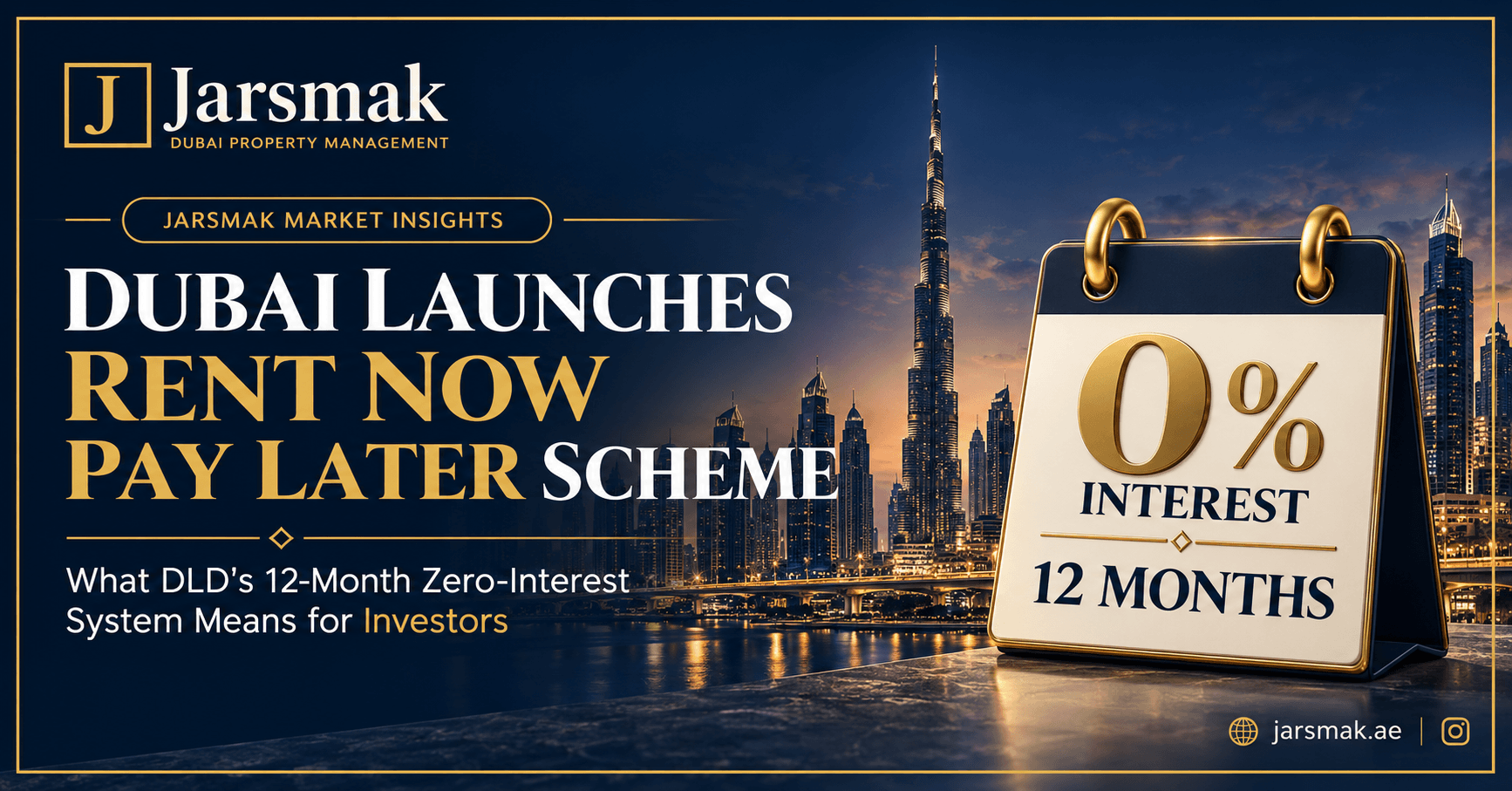
Landlords managing ready properties must focus on maintaining competitive rental pricing and proactive asset upkeep. Properties integrated into modern digital payment systems and managed professionally consistently outperform self-managed units in tenant retention. Furthermore, upcoming municipal innovations—such as zero-interest 12-month rental payment initiatives—will likely accelerate tenant mobility toward professionally managed communities. Adapting to these operational shifts guarantees consistent net yields across changing market environments.
Macro Trends Shaping Future Dubai Property Returns
Broader economic initiatives continue to reinforce long-term property values across the United Arab Emirates. Dubai’s ongoing digital transformation, expanding investor visa pathways, and world-class infrastructure investments create an unshakeable foundation for real estate growth. Additionally, the city’s retention of top global rankings for greenfield foreign direct investment ensures a steady inflow of skilled professionals and corporate capital. These macroeconomic tailwinds indicate that every upcoming dubai real estate market update will reflect sustained market maturity rather than speculative volatility.
Capitalizing on these favorable conditions requires an active management approach tailored to non-resident owners. Overseas landlords residing in London, New York, Mumbai, or Singapore frequently face time-zone challenges, RERA compliance adjustments, and maintenance management from afar. Partnering with dedicated local experts converts active management headaches into predictable, hands-free passive income. Therefore, securing professional management remains the most reliable strategy for protecting asset value over time.
Maximizing Returns with Jarsmak Dubai Property Management
Navigating shifting transactional trends demands dedicated local leadership, operational precision, and proactive property care on the ground. Partnering with Jarsmak Dubai Property Management ensures that your real estate assets capture maximum market velocity while maintaining complete legal compliance. Operating from Sobha Ivory 1 in Business Bay, Jarsmak provides non-resident landlords with transparent digital accounting, AI-driven tenant placement, and 24/7 predictive maintenance.
Whether you hold off-plan allocations transitioning to handover or ready apartments in high-yield hubs like JVC, our team optimizes your net rental returns. From automated lease management to tenant relations, Jarsmak converts complex international landlordship into effortless passive income. Contact Jarsmak Dubai Property Management today or visit jarsmak.ae to receive a tailored portfolio consultation and safeguard your real estate investments in Dubai.