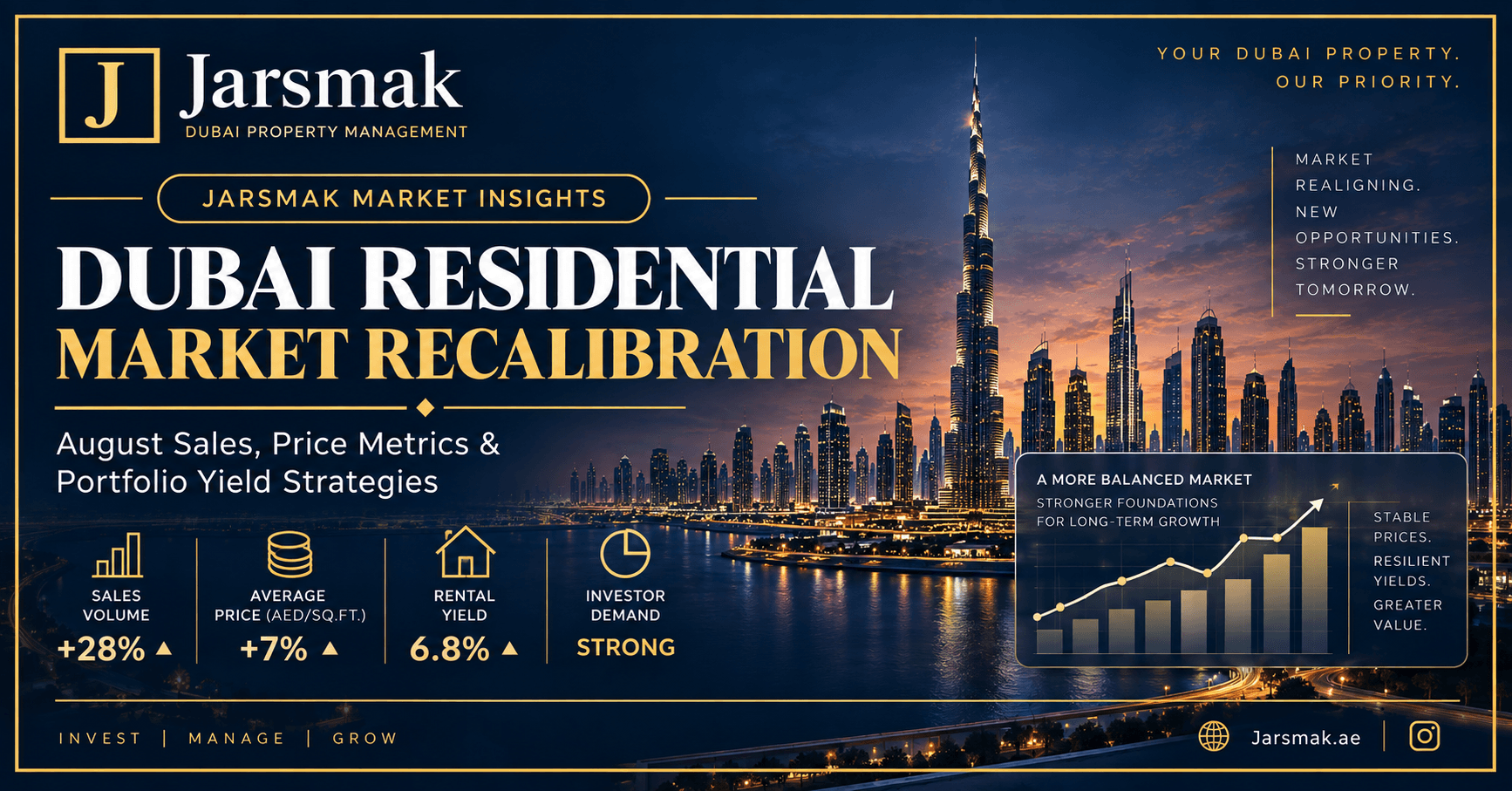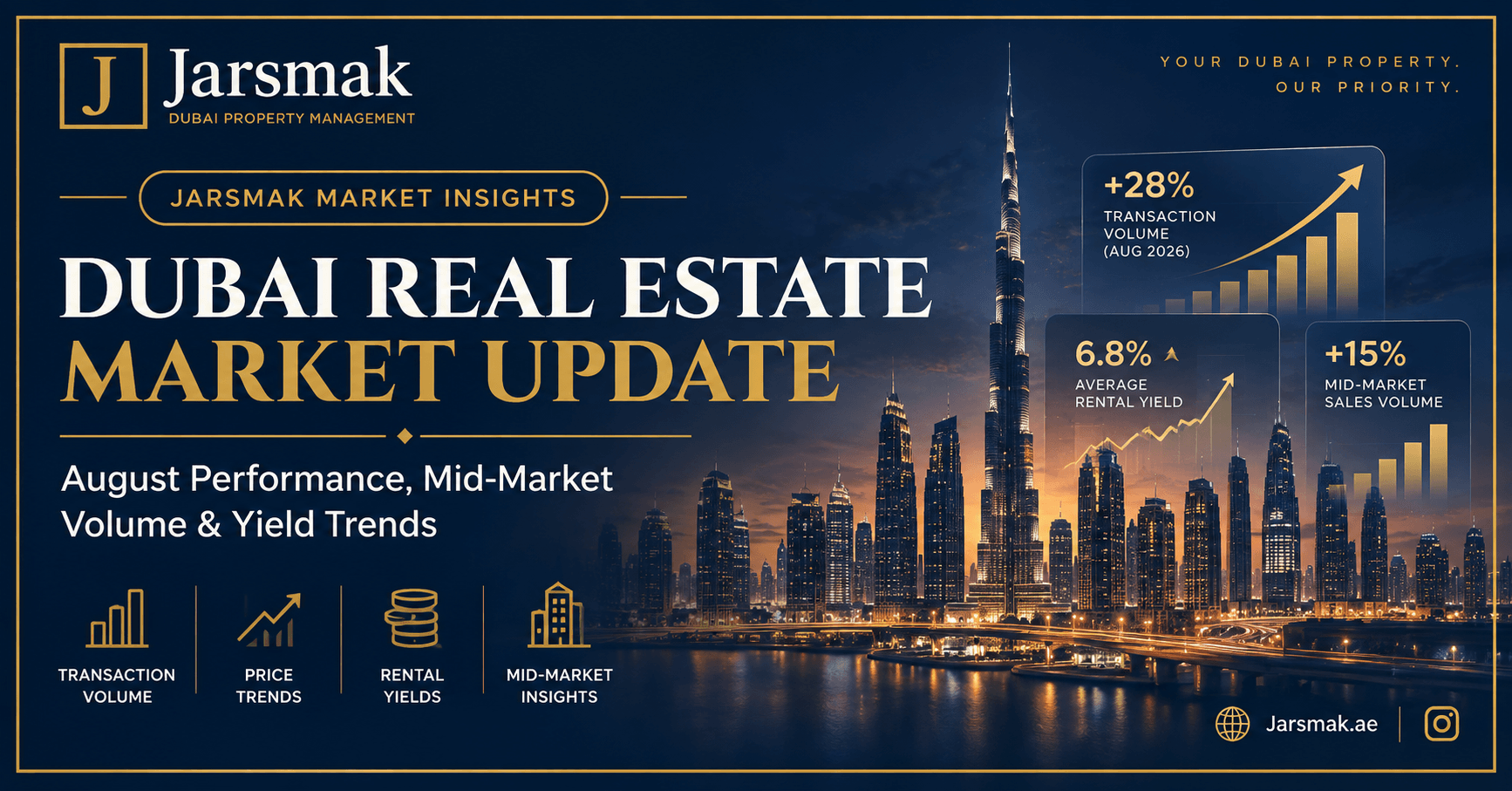
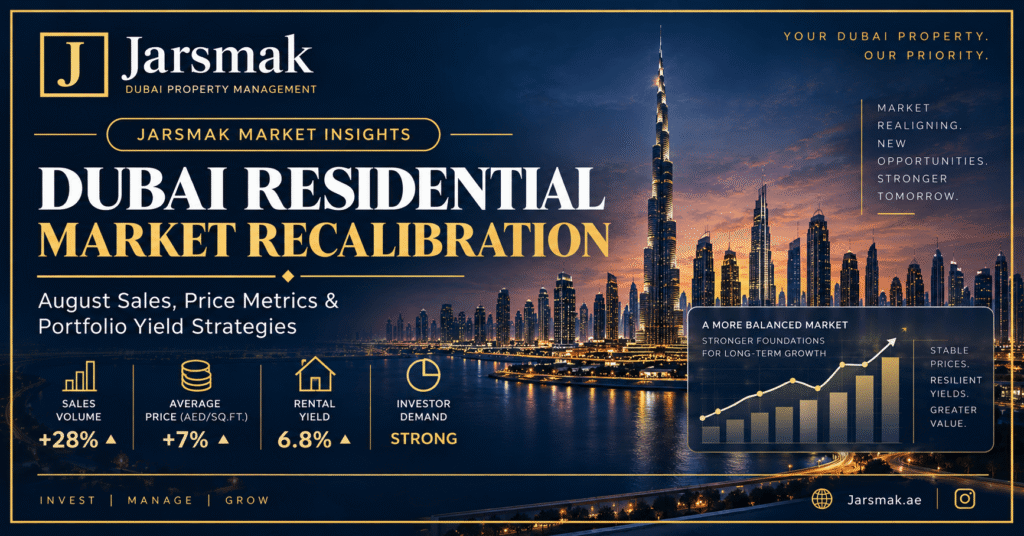
Has the multi-year rally in UAE real estate finally hit a ceiling, or are we witnessing a healthy market recalibration? Analyzing the latest dubai residential market price update provides international investors with essential clarity regarding current capital movements. New data from Cavendish Maxwell indicates that August registered a 1.7% year-on-year drop in average residential sales prices, alongside a 1.3% decline over the preceding three months. Despite this price easing, overall transactional activity remained substantial across the emirate. Consequently, understanding these shifting market dynamics allows non-resident owners to adjust pricing strategies and protect total returns.
Analyzing Data in the Dubai Residential Market Price Update
Examining transactional totals reveals that residential sales reached AED 23.4 billion during August alone. Year-to-date figures show nearly AED 270 billion in total property transactions, representing a 24% adjustment compared with the same period in 2025. Furthermore, monthly trading volume eased by roughly 14% from July, mirroring the seasonal summer slowdown typical of regional buying cycles. The data presented in this dubai residential market price update shows that underlying liquidity remains robust despite softer headline prices. According to this dubai residential market price update, average sales values settled at AED 1,636 per square foot across transacted assets.
READ: Dubai Luxury Property Management ROI: 2026 Guide
Off-plan acquisitions continued to command the overwhelming majority of buyer attention throughout the month. Specifically, unbuilt developments captured roughly three-quarters of total August sales, underscoring ongoing confidence in developer payment schedules and master community planning. Industry analysts emphasize that this price movement signals a broader market shift rather than a structural downturn. After several years of rapid capital growth and elevated trading activity, the real estate landscape is entering a more mature phase. Fewer aggressive new launches, broader regional economic considerations, and normalized buyer behavior are collectively shaping this new baseline.
Market Recalibration Shown in the Dubai Residential Market Price Update
For real estate agents, portfolio managers, and private landlords, this evolution carries direct strategic implications. Pricing strategies built strictly around continuous capital appreciation must now be recalibrated toward cash-flow stability. Industry experts reading the dubai residential market price update highlight that client conversations surrounding valuation and negotiation leverage are becoming far more nuanced. Buyers now find increased room to negotiate purchase prices, terms, and snagging concessions. Conversely, sellers must adjust long-held expectations after operating within a prolonged seller’s market for several years.
Navigating this transition effectively requires pivoting focus from speculative flipping toward long-term rental yield preservation. Furthermore, the dubai residential market price update reveals that secondary market assets require proactive maintenance to remain competitive against incoming off-plan inventory. Thriving mid-market communities—such as Jumeirah Village Circle (JVC), Al Barsha, and Dubai South—continue delivering resilient 7% to 9% net rental returns. Acquiring properties within these high-occupancy corridors shields landlords against capital depreciation by securing steady rental income. Consequently, strategic asset selection combined with professional property management guarantees sustainable portfolio performance.
Buyer Negotiation Tactics Following the Dubai Residential Market Price Update
Capitalizing on the dubai residential market price update requires overseas landlords to adjust their asset care protocols. Without dedicated local oversight on the ground, minor property defects and extended vacancy periods can rapidly erode profit margins. Preventative maintenance supervised by local experts saves property owners up to 15% annually compared to emergency repairs. In addition, rigorous AI-driven tenant screening guarantees higher retention rates and eliminates payment collection delays. Overseas investors residing in London, New York, Mumbai, or Singapore benefit immensely from turning active management stress into hands-free passive income.
READ: Dubai Real Estate Market Update: August
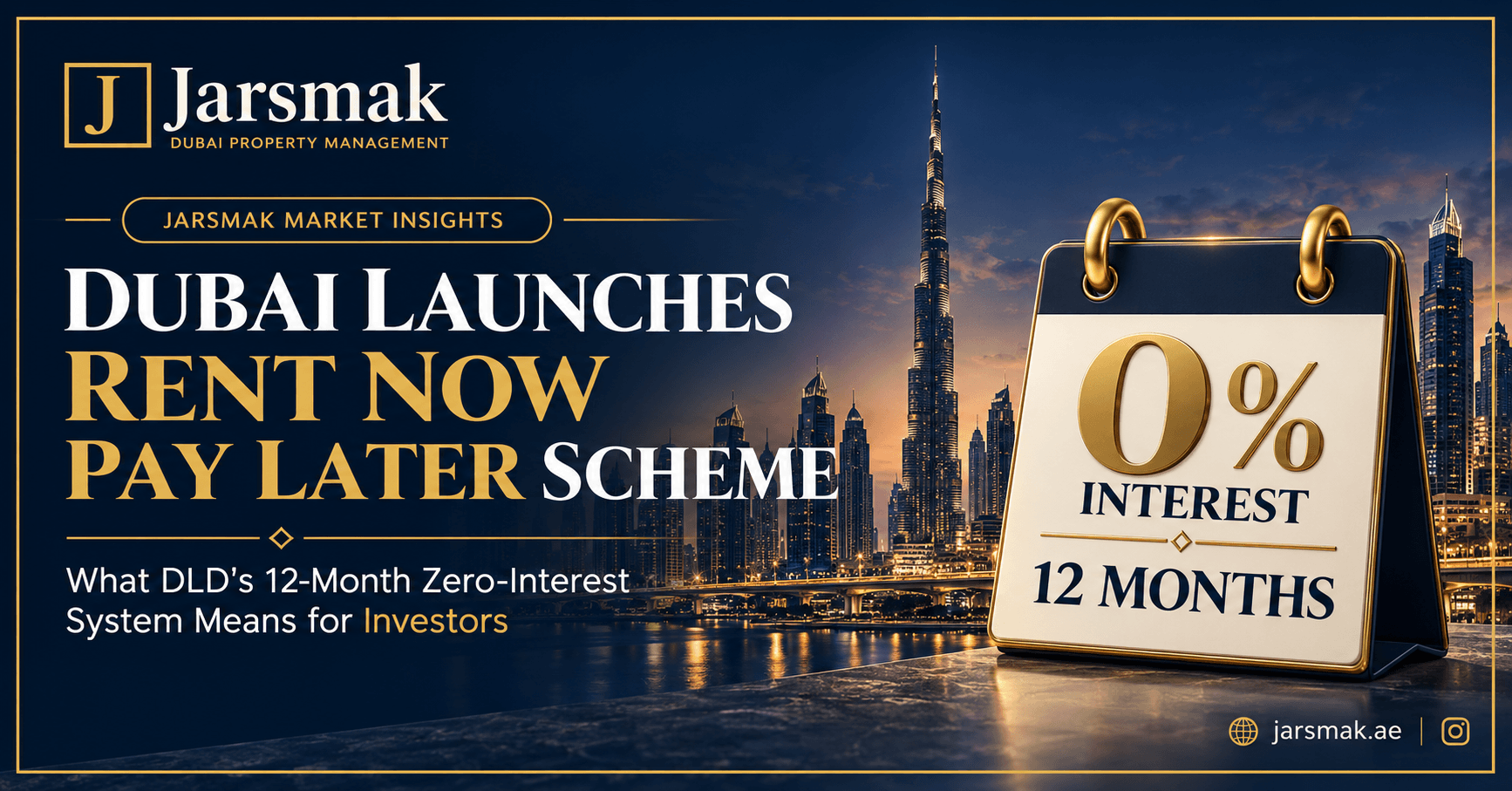
Macroeconomic fundamentals across the United Arab Emirates continue supporting long-term real estate stability. Dubai’s retention of top global rankings for foreign direct investment, expanding long-term Golden Visa pathways, and accelerated digital infrastructure development provide an unshakeable foundation. Furthermore, upcoming municipal innovations like zero-interest 12-month rental payment initiatives promise to enhance tenant liquidity further. Properties integrated into modern digital payment systems and maintained to institutional standards will consistently command premium rental rates. Analyzing these long-term indicators reinforces that market normalization creates ideal entry opportunities for disciplined investors.
Yield Protection Strategies After the Dubai Residential Market Price Update
Protecting net returns during a market shift demands active management tailored specifically to non-resident owners. When capital appreciation slows down, rental cash flow becomes the primary driver of total return on investment. Overseas landlords must ensure that lease renewals reflect current market benchmarks while keeping tenant satisfaction high. In addition, prompt handling of routine maintenance requests prevents small issues from escalating into expensive structural repairs. Maintaining physical asset quality preserves long-term valuation and ensures rapid re-leasing during tenant turnover.
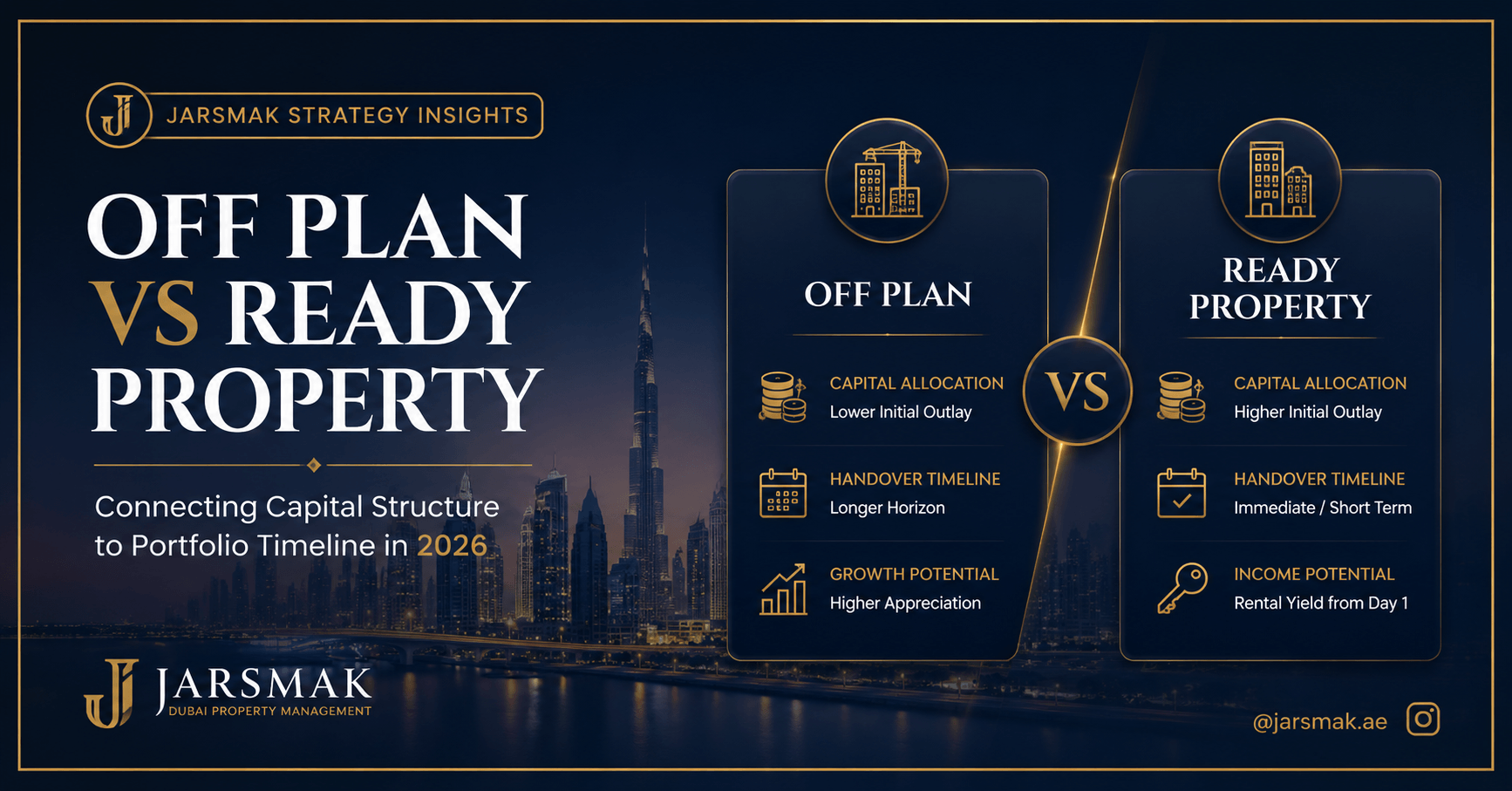
READ: Off Plan vs Ready Property Strategy Guide
Transitioning to a mature market phase also highlights the importance of transparent financial accounting and regulatory compliance. Ensuring that Ejari registrations, statutory notices, and rent adjustments align strictly with Real Estate Regulatory Agency (RERA) guidelines eliminates legal liabilities. Moreover, utilizing automated digital banking solutions simplifies cross-border currency transfers and rental collection. Combining operational efficiency with rigorous legal compliance protects your portfolio against unexpected financial friction. As a result, structured management turns market recalibrations into predictable wealth growth opportunities.
Partnering with Jarsmak Dubai Property Management
Reviewing the dubai residential market price update confirms that Jarsmak Dubai Property Management is ideally positioned to protect your real estate assets. Operating from Sobha Ivory 1 in Business Bay, our licensed management firm provides non-resident landlords with total operational support. From automated financial reporting and RERA legal compliance to 24/7 emergency maintenance, we preserve your asset’s physical condition and yield potential. Partnering with Jarsmak converts complex remote ownership into a seamless, predictable income stream.
Contact Jarsmak Dubai Property Management today or visit jarsmak.ae to book your portfolio consultation and optimize your Dubai property returns today.